BACKPACK PARKING
Wall-Mounted Backpack Hook Rail
Gives each school bag a reachable return spot without leaving it across the entry floor.
Find on AmazonSearch Amazon ↗
A backpack drop zone needs a place for the bag and a separate route for the lunchbox coming home. These steps create a small school-day station that keeps clean gear, current papers, and the morning departure easier to manage.
Affiliate disclosure: As an Amazon Associate I earn from qualifying purchases.
Gives each school bag a reachable return spot without leaving it across the entry floor.
Find on AmazonSearch Amazon ↗Creates accessible bag sections and a place to sit while preparing to leave.
Find on AmazonSearch Amazon ↗Contains clean empty lunchboxes separately from shoes and other dirty arrival gear.
Find on AmazonSearch Amazon ↗Keeps the current school folder close to the bag it needs to travel with.
Find on AmazonSearch Amazon ↗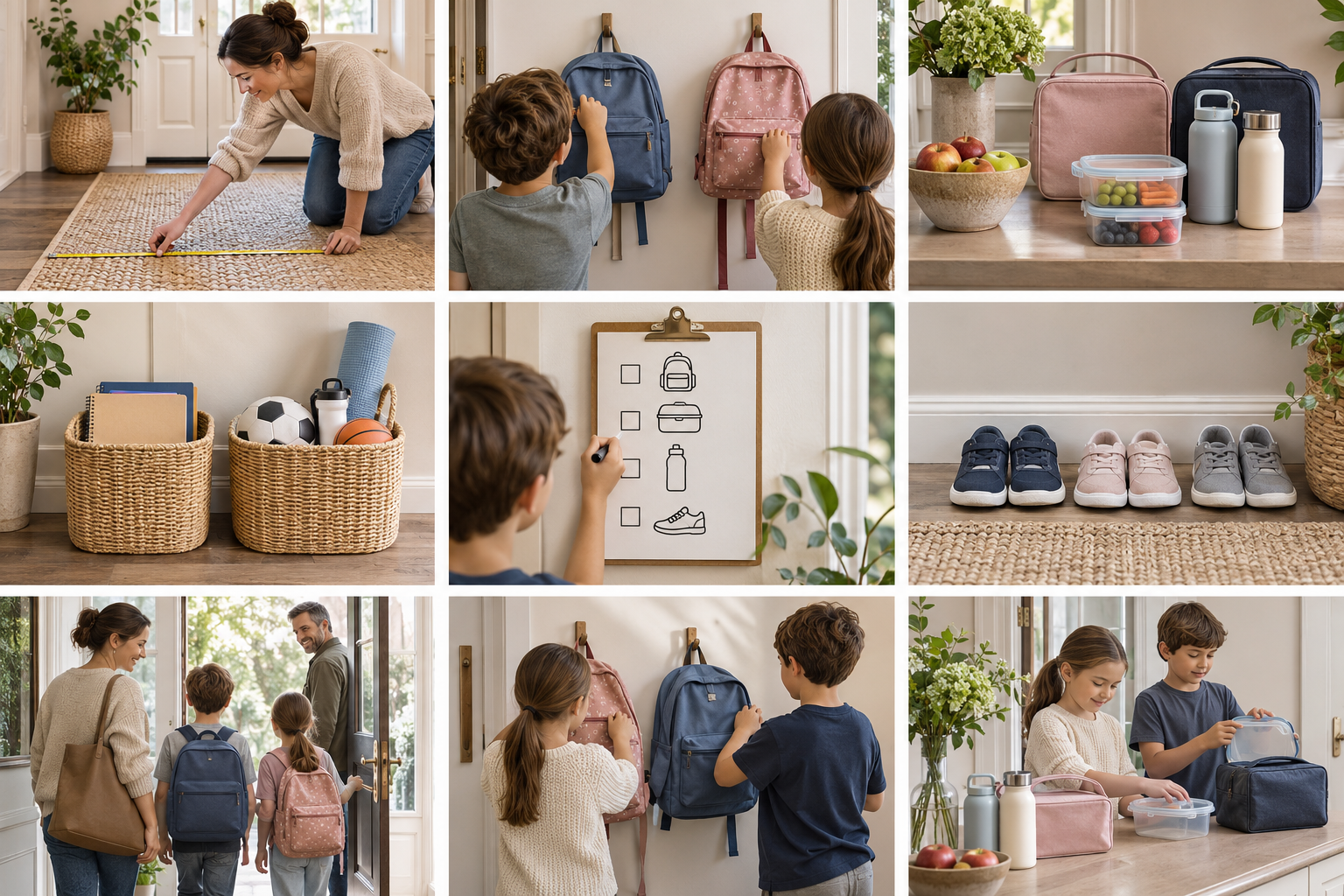
A drop zone is easier to use when it sits where bags naturally arrive and leave, rather than in a remote storage room. Choose a small wall section or cubby area that does not block the entrance. Measure the actual depth of the backpacks and the space needed to reach the lunchbox tray without stepping over other belongings.
One obvious return spot can keep the bag from moving between the floor, sofa, and kitchen chairs. Set up a hook or cubby that the intended user can reach comfortably, with hardware suitable for the loaded bag and the actual wall. Leave neighboring bags far enough apart that taking one down does not pull another from its place.
Find a reachable wall hook rail for school backpacks on Amazon ↗
The lunchbox should leave the bag when it comes home so food and containers can be handled appropriately. Give the clean empty lunchbox a washable landing tray after it has been cleaned and dried according to its care instructions. Keep that tray separate from muddy footwear, and do not use the drop zone to store foods that require refrigeration.
Find a washable tray for clean school lunchboxes on Amazon ↗
A small folder pocket near the backpack gives notices and return forms a visible handoff point. Keep only current papers there and move completed actions to their appropriate destination instead of letting the pocket become an archive. Place it where the folder can be checked without unloading the backpack or covering the lunchbox tray.
Find a small school-folder pocket for a backpack station on Amazon ↗
A pencil case or other suitable school-day accessory can go missing when it is left loose across a bench. A small removable bin within the assigned cubby can hold those pieces together until they return to the bag. Keep the selection modest so the bin supports packing rather than becoming a second unstructured school bag.
Find a small cubby bin for school-bag accessories on Amazon ↗
Check that the backpack is in its assigned place, current papers have been reviewed, and the lunchbox is clean and ready for appropriate packing. Keep foods that need chilling in their proper storage until the packing routine requires them. A simple visual reminder can support the habit without turning the entry wall into a long complicated checklist.
Find a small visual-routine card holder for the entryway on Amazon ↗
Take it out after school so food, containers, and the lunchbox can be handled and cleaned appropriately. Store the clean dry lunchbox in its assigned spot, and keep foods that require refrigeration in proper cold storage rather than leaving a packed perishable lunch at the drop zone.
Choose a comfortable reachable position for its intended user rather than one universal height. Check the loaded bag’s drop, neighboring bags, wall structure, and hardware rating. The user should not need to climb on furniture to take the backpack down.
Keep the current folder, notices, and forms that still need to travel or receive attention. Move completed work and retained papers to appropriate storage, so the small handoff pocket remains easy to check before the bag leaves the house.