SLIM UNDER-SINK PULL-OUT
Narrow L-Shaped Under-Sink Sliding Organizer
Brings supplies forward from a clear cabinet bay without covering the drain or valves.
Find on AmazonSearch Amazon ↗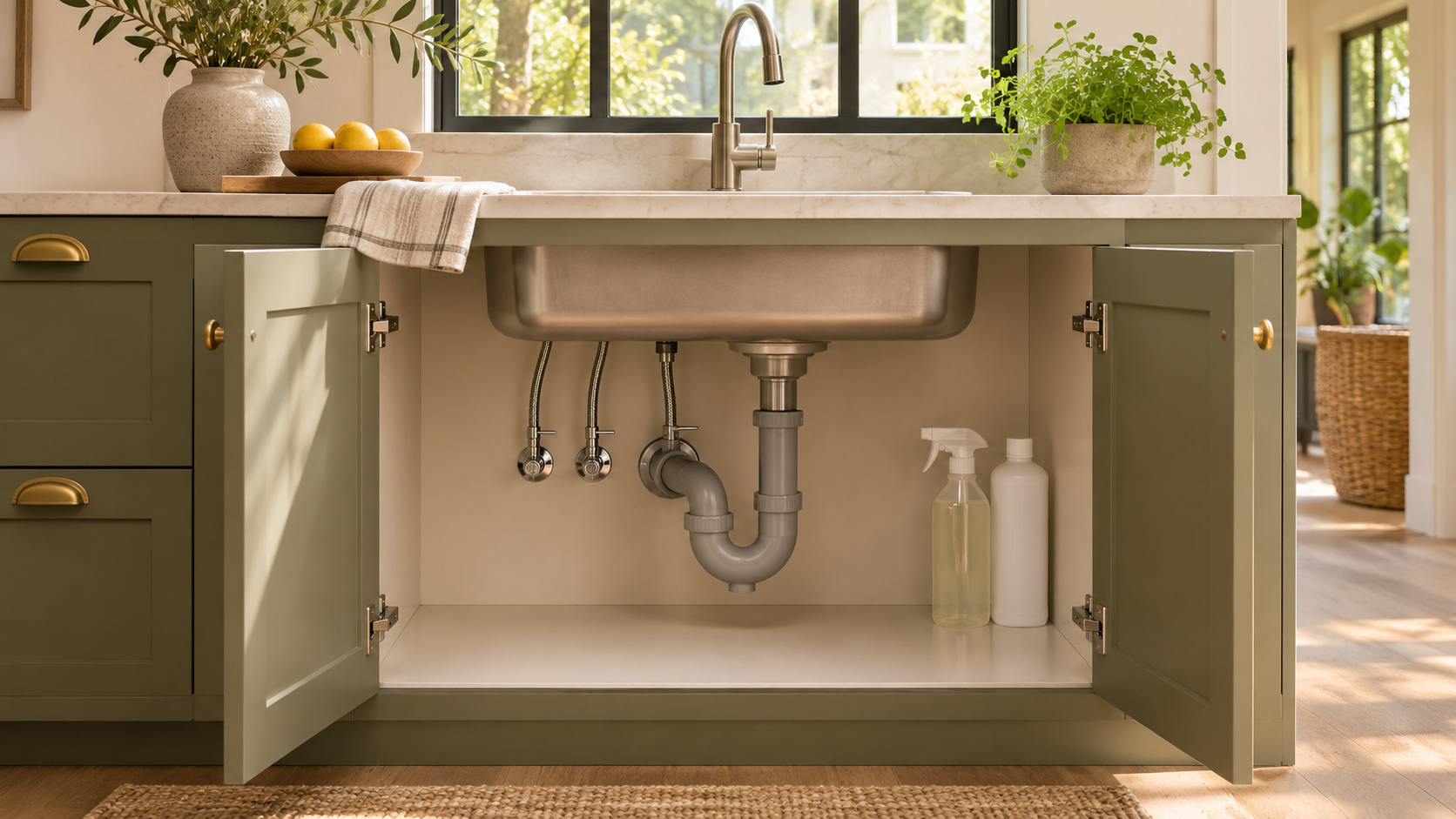
The cabinet under a kitchen sink rarely offers one simple rectangle of storage space. Work around the drain, valves, and any disposal or hoses with separate small organizers that leave the plumbing visible and accessible.
Affiliate disclosure: As an Amazon Associate I earn from qualifying purchases.
Brings supplies forward from a clear cabinet bay without covering the drain or valves.
Find on AmazonSearch Amazon ↗Keeps kitchen cleaning tools together in a container that lifts out for use.
Find on AmazonSearch Amazon ↗Uses suitable door clearance for lightweight accessories without filling the cabinet floor.
Find on AmazonSearch Amazon ↗Provides a removable cleaning surface while keeping the cabinet base accessible for inspection.
Find on AmazonSearch Amazon ↗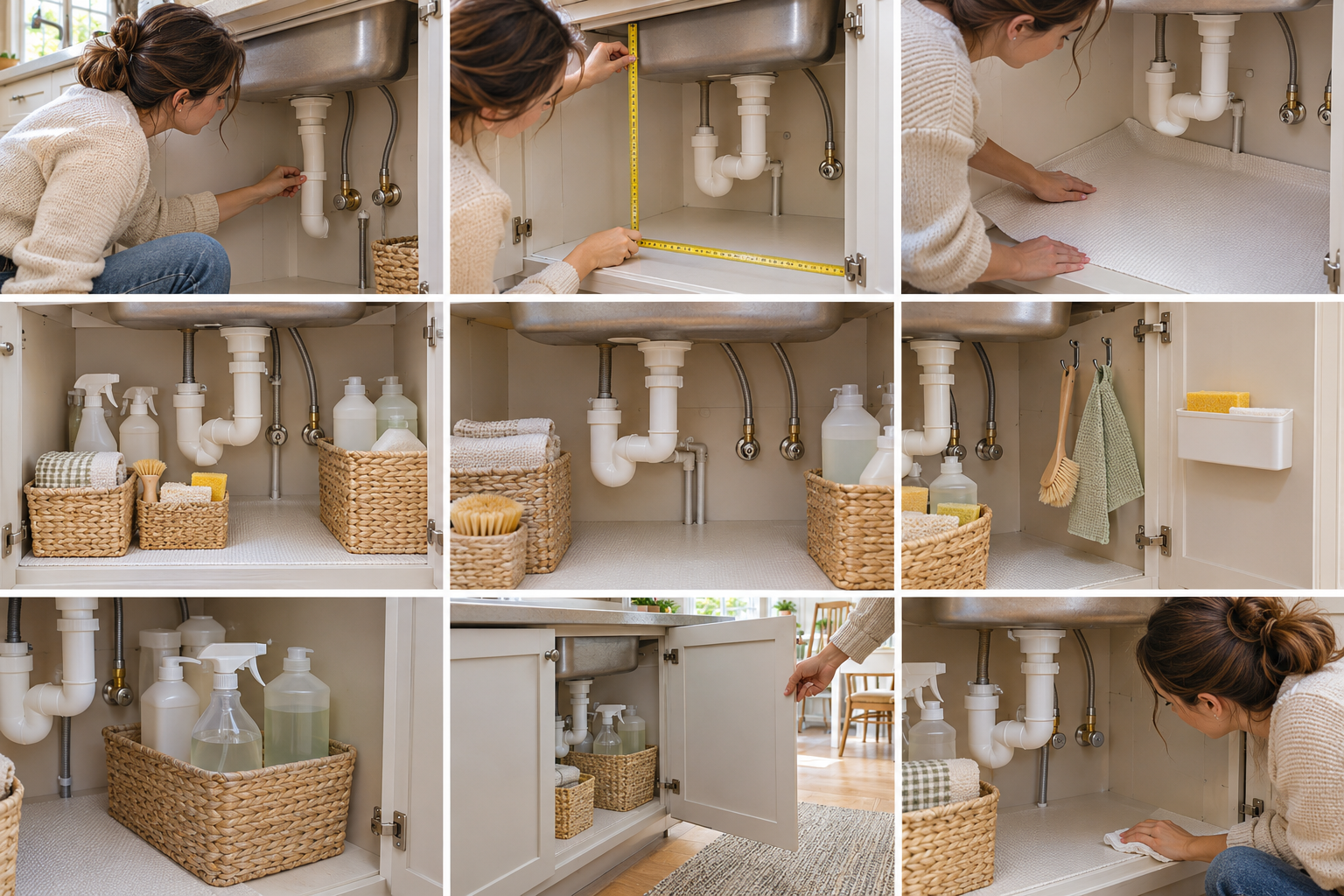
Take out the loose supplies so you can see the cabinet floor, drain connections, and water lines clearly. Deal with signs of leakage or damaged panels before adding organizers that might conceal them. Keep the finished layout easy to inspect rather than filling the cabinet so tightly that damp areas would remain hidden.
Find a removable liner for a kitchen sink cabinet on Amazon ↗
Measure each usable bay separately, including the space past the open door hinges and beneath the lowest pipe fitting. Account for any disposal, supply hoses, or other installed equipment without moving or altering them to make an organizer fit. Choose storage from those real clearances instead of the cabinet’s overall exterior dimensions.
Find a compact measuring tape for cabinet openings on Amazon ↗
Two small washable bins can fit irregular spaces more easily than a large container stretched across the plumbing. Group the kitchen supplies by use and keep bottles upright in their original containers. Leave the drain, shutoff valves, hoses, and electrical components accessible rather than pushing one bin behind another to fill every gap.
Find low washable bins for kitchen sink cabinets on Amazon ↗
A slim pull-out can bring supplies forward from a deep side section without requiring a reach around the drain. Check the fully loaded height and the entire travel of the basket, not just the frame at rest. Use the mounting method specified by the manufacturer, and never use plumbing pipes as organizer supports.
Find a narrow kitchen under-sink pull-out basket on Amazon ↗
A light brush or dry dishcloth may fit on the inside of the cabinet door when there is genuine clearance behind it. Compare the loaded holder with the nearest shelf, pipe, and hinge before fitting it. Keep the contents modest so the door closes normally and the holder does not strain the panel or catch on installed equipment.
A small handled caddy can gather the tools you carry from the sink cabinet to the kitchen surfaces. Choose a washable design and a loaded weight that is comfortable to lift through the actual cabinet opening. Store cleaning products securely according to their labels and your household’s needs, keeping them separate from anything used for food storage.
Return the intended supplies and pull each organizer out through the open doorway to check for snags. Confirm that valves and plumbing connections remain reachable and that no bottle or basket rubs against hoses or electrical components. Lift the bins out periodically so the cabinet base and any removable liner can be inspected and cleaned.
Find a compact removable under-sink storage tray on Amazon ↗
Not before measuring around the plumbing. Separate small bins or a narrow side-bay slider can use irregular openings while leaving valves and connections accessible. A large frame that fits the cabinet width may still collide with a drain, disposal, hose, or door hinge.
Do not use plumbing as storage support. Choose organizers that stand or mount according to their own instructions, and keep them clear of pipes, hoses, valves, and installed electrical equipment.
Keep access to shutoff valves, drain connections, hoses, and installed equipment required for inspection or service. Make the cabinet base easy to check as well; organizers should lift out without dismantling the entire storage arrangement.