EASY-ACCESS TOY BASKET
Wide Felt Toy Basket with Handles
Keeps a small toy collection visible and easy to return beside the sofa.
Find on AmazonSearch Amazon ↗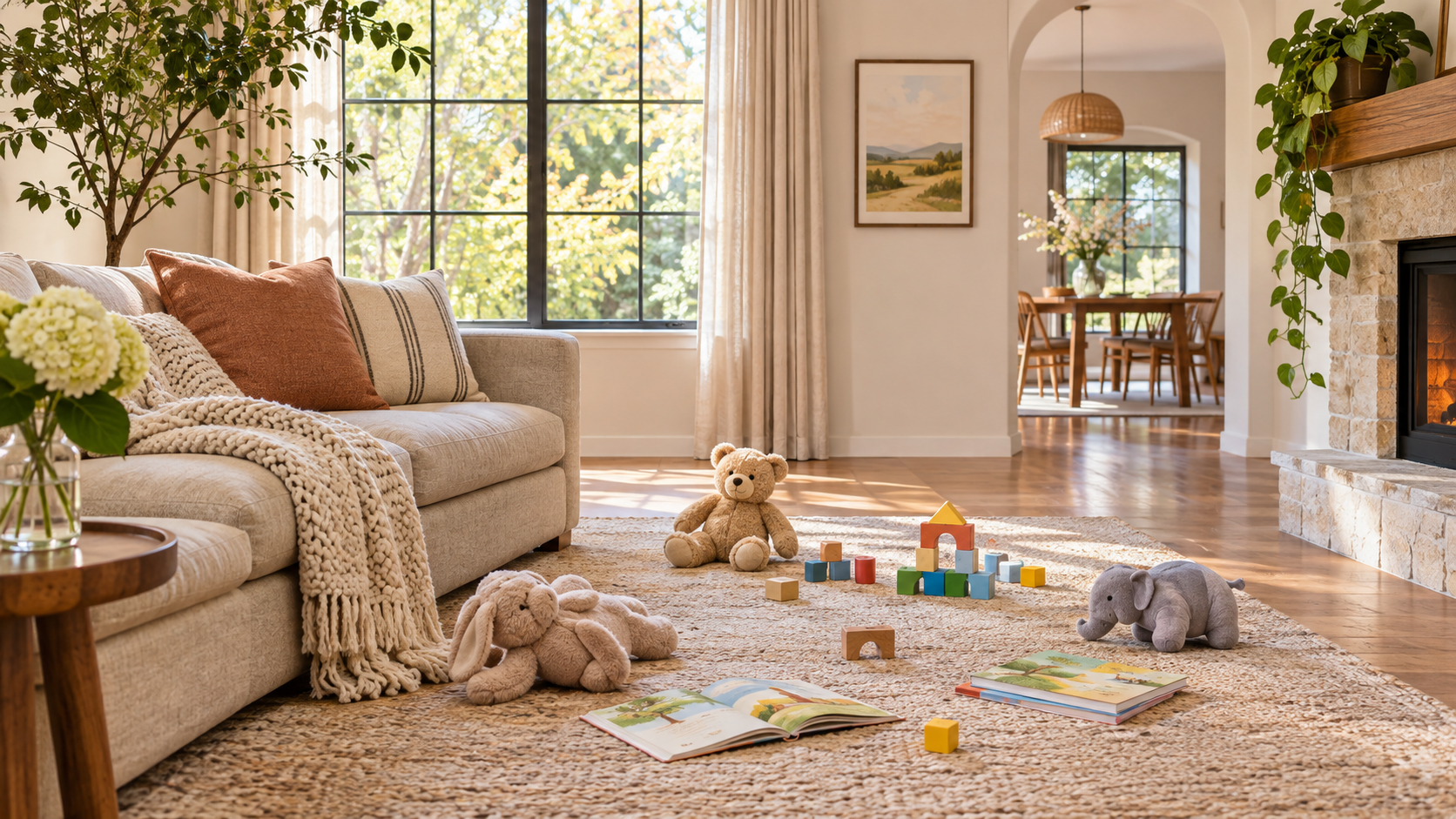
Living-room toy storage works best when children can reach it and adults can still use the room comfortably. These ideas give everyday toys a clear return spot without filling the space beside the sofa with oversized storage furniture.
Affiliate disclosure: As an Amazon Associate I earn from qualifying purchases.
Keeps a small toy collection visible and easy to return beside the sofa.
Find on AmazonSearch Amazon ↗Combines living-room seating or a footrest with contained storage for larger toys and games.
Find on AmazonSearch Amazon ↗Creates separate return spots for toys in furniture that suits a shared living room.
Find on AmazonSearch Amazon ↗Keeps compatible game pieces together inside a cabinet, basket, or storage ottoman.
Find on AmazonSearch Amazon ↗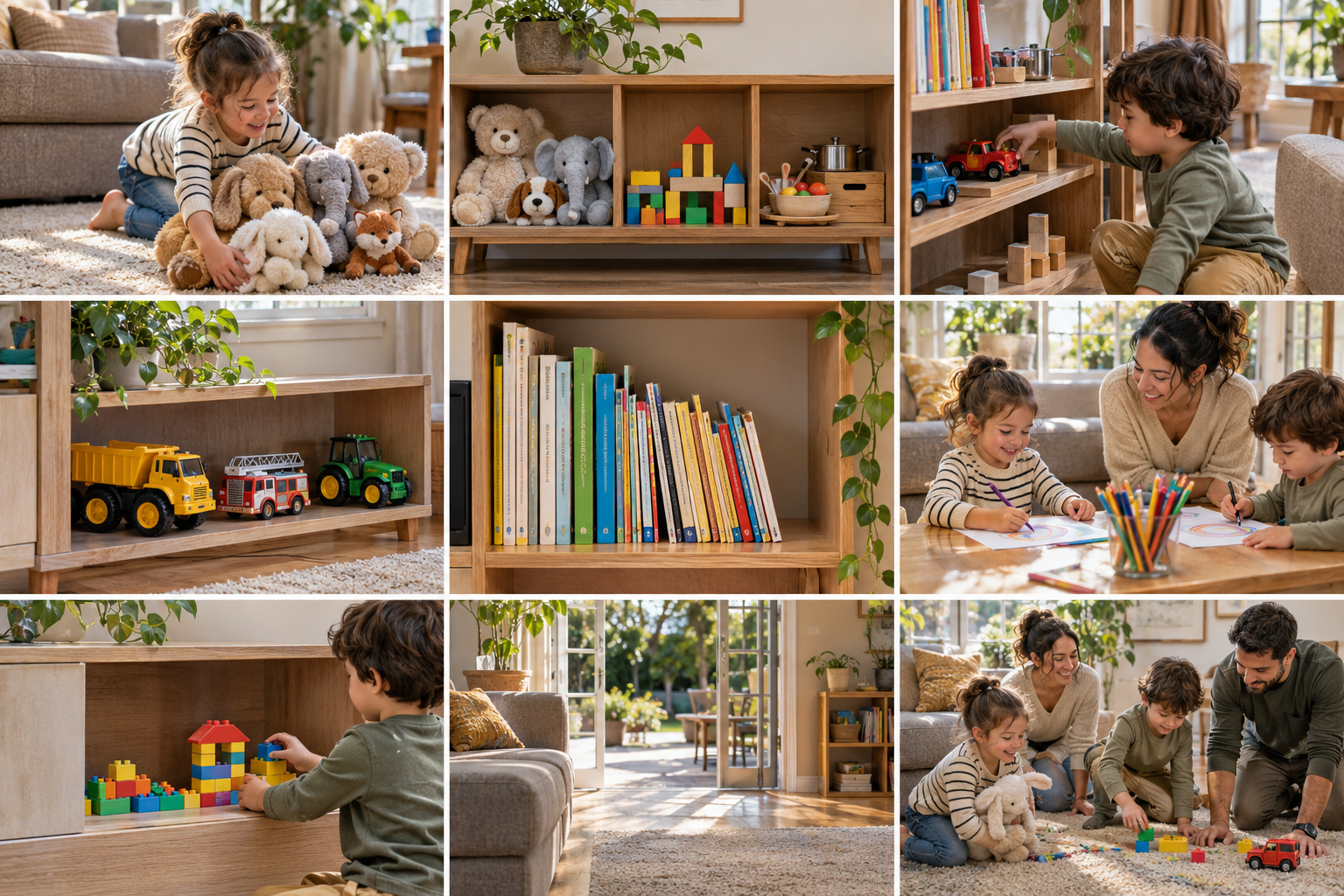
A wide shallow basket makes everyday toys easier to see than a deep container filled to the rim. Choose a size that fits the living-room corner without narrowing the route past the sofa. Keep the selection modest enough that a child can return one toy without emptying half the basket onto the rug.
A storage ottoman can replace a separate toy chest when a footrest already belongs in the seating area. Choose furniture with storage and lid features appropriate to the household, and follow the manufacturer’s safety guidance. Keep its contents organized in a few manageable groups so the ottoman does not become a hidden pile of unrelated pieces.
A low storage bench can separate blocks, soft toys, and vehicles while still functioning as living-room furniture. Fit each cubby with a removable basket that can be pulled out without scraping or tipping the bench. Follow the furniture’s anchoring requirements and keep heavier toy groups low, where they are easier to lift and return.
Find a low toy-storage bench with basket cubbies on Amazon ↗
Board-game pieces can stay together in a pouch when the original insert is damaged or the box wastes too much room. Keep the rules and any necessary identification with the game, and choose a pouch large enough to close without bending components. Store games with small pieces where they suit the ages of children using the living room.
A short book ledge near the sofa can give a few current picture books a clear home after reading. Place it where covers are easy to recognize and books can be lifted out without climbing over furniture. Keep the display limited, with any required mounting hardware installed for the actual wall and loaded shelf.
A shallow rolling tray can hold a building project that would otherwise spread across the coffee table. Measure the clearance beneath the console or other intended parking spot, including the tray’s wheels and the tallest stored pieces. Keep the tray away from the walking route, and choose smooth edges and a suitable load for the household.
A portable building tray gives loose bricks a boundary while a child plays in the shared living area. Choose a tray large enough for the activity but comfortable to carry back to its storage spot. Keep small-piece toys appropriate to the children present, and check beneath the sofa after play rather than relying on the raised rim to catch everything.
Find a portable building-block tray with a raised rim on Amazon ↗
Toy vehicles are easier to find when they share a small divided container instead of sinking beneath soft toys. Choose compartments that fit the actual vehicles and a box that a child can open and return comfortably. Keep the box inside the living-room storage furniture when play ends rather than lining every vehicle along the window ledge.
Find a divided storage box for small toy vehicles on Amazon ↗
When the living-room toy basket stays overfull, swapping a few toys can work better than adding more storage beside the sofa. Keep the active selection in an easy-access basket and the household’s reserve toys in their appropriate existing storage location. Change the selection according to what gets used, leaving enough space for a quick return after play.
Find a removable basket for a living-room toy rotation on Amazon ↗
Start with the toys actually used in the room and the floor space available around your seating. A shallow basket or a few low cubbies may be enough for the active selection. If storage begins to block doors or the route past the sofa, reduce the selection before adding another large unit.
Not always. Small pieces can disappear underneath larger toys, making cleanup look complete while retrieval gets harder. Shallow baskets and smaller category groups can make it easier to see what belongs where and take out one item without emptying the container.
Check the manufacturer’s storage, lid, seating, and safety instructions for your household. Consider how the lid opens, where it rests, and whether children could become trapped or pinch their fingers. Keep small-piece toys stored appropriately for the children who can access the room.