SECOND HANGING LEVEL
Adjustable Hanging Closet Doubler Rod
Adds a lower hanging level beneath an existing rail when garment lengths allow.
Find on AmazonSearch Amazon ↗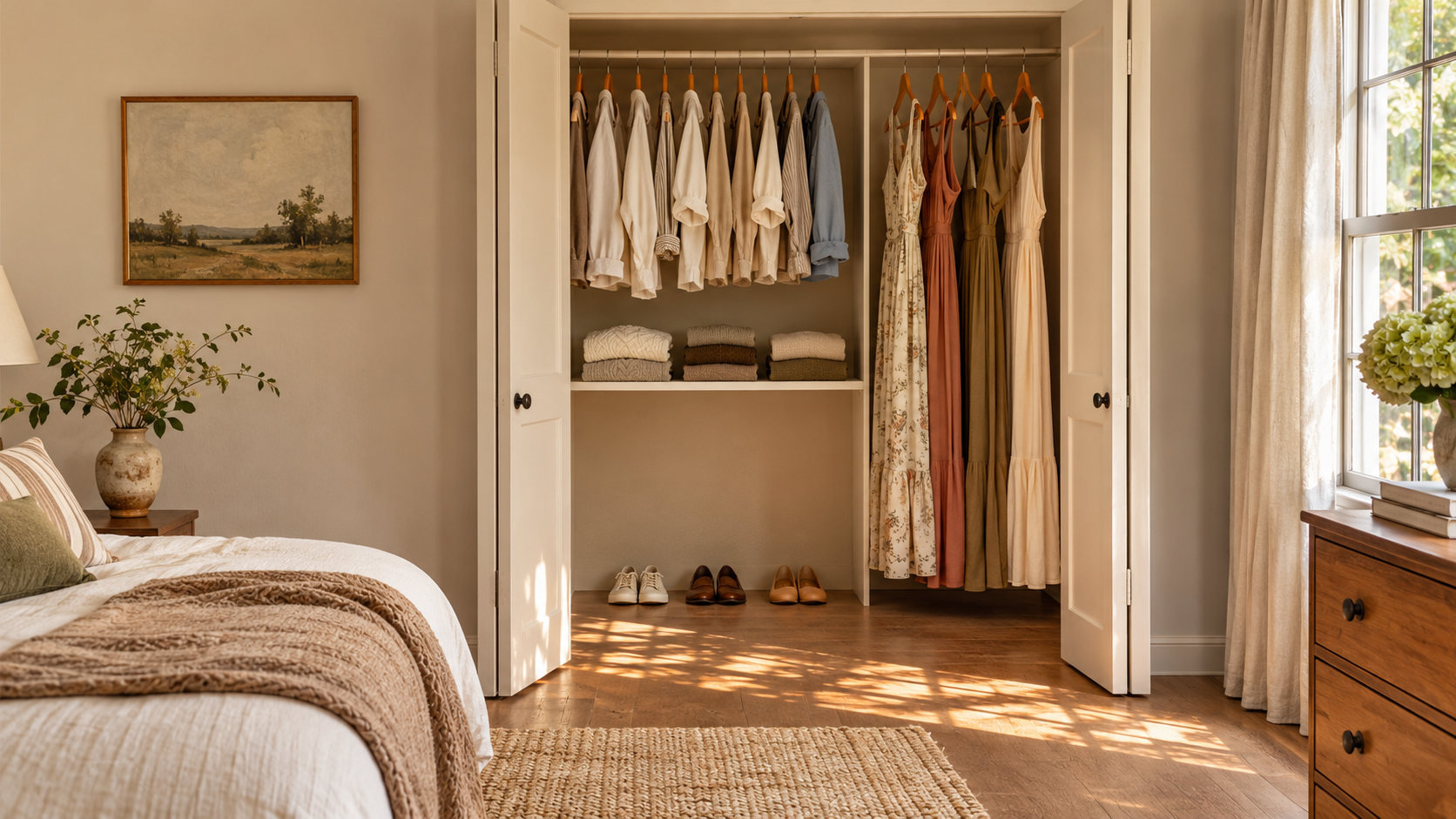
Double hanging rods work when the clothes fit the space between them. These small-closet ideas pair upper and lower hanging zones with useful hanger choices, accessible layouts, and room for the garments that still need full height.
Affiliate disclosure: As an Amazon Associate I earn from qualifying purchases.
Adds a lower hanging level beneath an existing rail when garment lengths allow.
Find on AmazonSearch Amazon ↗Keeps short tops aligned on crowded rods without the bulk of thick hangers.
Find on AmazonSearch Amazon ↗Hangs skirts and shorts with a compact drop suitable for a lower rail.
Find on AmazonSearch Amazon ↗Supports longer rail spans when installed on suitable framing according to the hardware instructions.
Find on AmazonSearch Amazon ↗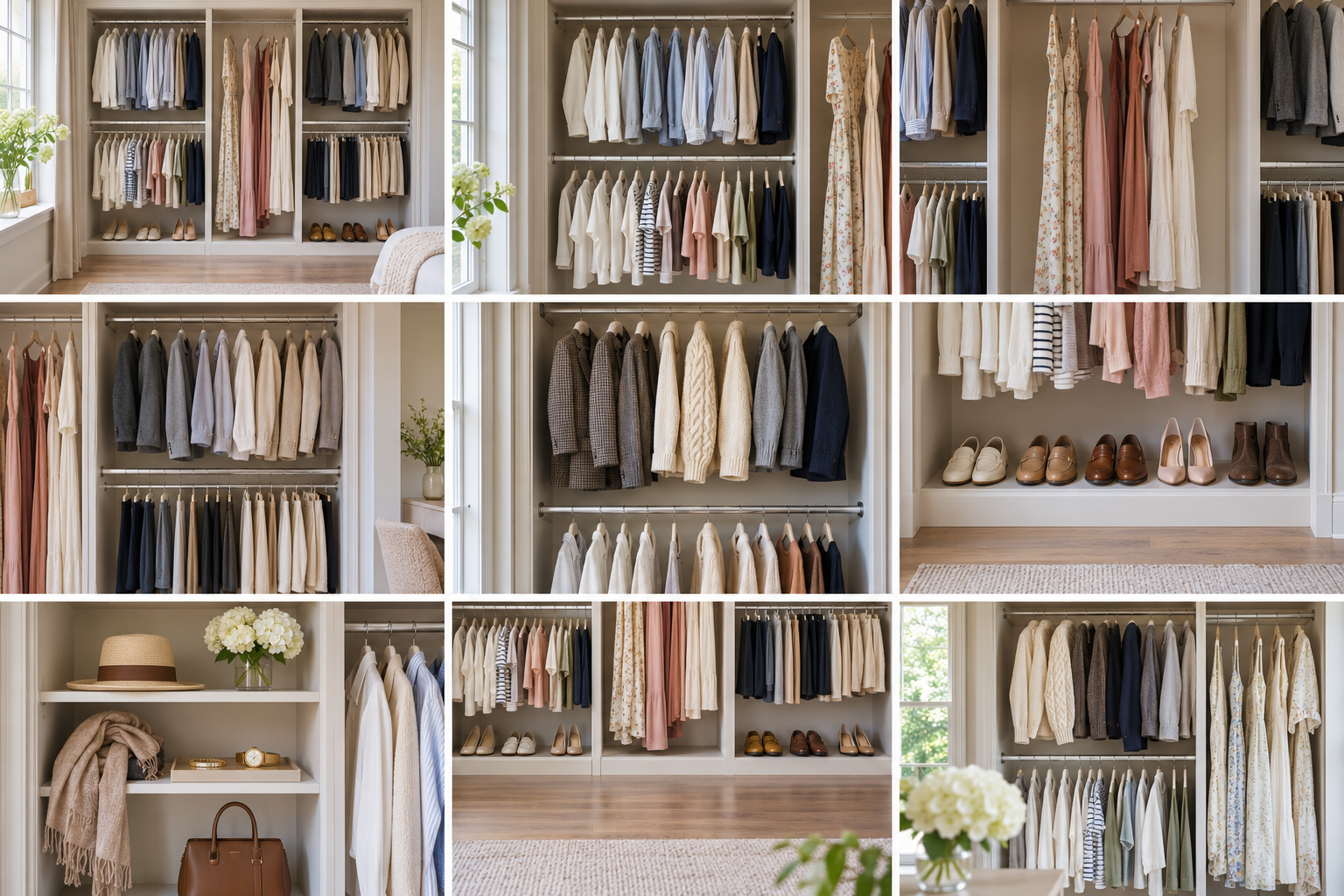
An adjustable hanging rod can create a second clothing level beneath an existing closet rail. Set its height around the longest shirts in the upper row, not an empty-closet diagram. Check the existing rail’s load capacity before adding the lower rod, its hangers, and all the clothes that will hang from them.
Short shirts and folded-over garments usually suit a double-hang section better than tunics or long coats. Hang the longest item you plan to keep on the upper rod before setting the lower level. The hem should remain clear of the lower hangers so clothes can be removed without brushing through another row.
A closet does not have to use two rods across its entire width. Reserving one vertical bay for dresses or long coats can prevent those garments from draping over the lower rail. Measure that group first, then divide the remaining closet width into a double-hang section sized for your shorter clothes.
Find a closet system with double-hang and long-hang sections on Amazon ↗
Thick or mismatched hangers can take up useful rail space before the clothing itself is counted. A coordinated slim hanger suits many lightweight shirts and makes neighboring items easier to separate. Choose a hanger that supports the garment’s shoulders properly, and keep enough breathing room that removing one shirt does not drag several others along.
Pants folded over a suitable hanger can fit a lower rail more easily than trousers hung at full length from the waistband. Check the folded drop against the closet floor or any shoe storage below. A hanger with an accessible bar can also make it easier to remove one pair without dismantling the surrounding row.
Skirts and shorts can work on a lower rail if the hanger’s hook and clips do not consume too much vertical space. Compare the complete hanging length, including the hanger, with the clearance above the floor. Use clips suitable for the fabric so making the garment fit does not leave avoidable marks at the waistband.
Find short-drop clip hangers for skirts and shorts on Amazon ↗
A purpose-built pull-down closet rail can make an upper hanging level easier to reach in some installations. Check the mechanism’s travel against the lower rod and its clothing before choosing one. Installation, wall support, and load requirements matter here; a rail that swings into the lower garments will not solve the access problem.
A lower rod can let a child choose and return a small group of everyday clothes without pulling on garments above. Set the rail for the child’s comfortable reach and keep the selection modest. Use appropriately sized hangers, and check the closet’s stability and fittings rather than encouraging climbing on shelves or drawers.
When both rods carry several clothing categories, slim divider discs can make the start of each group easier to spot. Use simple categories such as short tops or folded pants rather than dividing a small row into too many sections. Keep the markers narrow so the dividers do not consume the hanging space you gained.
A compact scarf or belt hanger can use the end of a rail without spreading accessories across both levels. Measure its loaded drop and keep it out of the lower row’s travel. Avoid filling it so heavily that it twists into neighboring shirts or makes the rod’s end section difficult to browse.
A low shoe platform may fit beneath the lower hanging rod, but only if the clothes remain clear of the shoes. Measure with the longest lower-row garment hanging normally before adding a rack. Choose a modest height and depth so shoes can be removed without pushing clothing aside or scraping the closet doors.
If you regularly wear the same combinations, keep the short tops in one upper section and their coordinating pants directly below. This uses the double-hang layout as a visual dressing guide rather than another place to mix unrelated clothes. Keep the grouping flexible so one missing item does not leave an entire section unusable.
Find coordinated hangers for double-rod outfit sections on Amazon ↗
In a shared closet, adjacent double-hang sections can give both people access to an upper and lower rail. Dividing by side may work better than assigning one person the hard-to-reach top row. Compare the clothing lengths and usable width on each side before installing rails or dividing the space with shelf units.
Find adjustable double-hang closet sections for shared wardrobes on Amazon ↗
An upper rail full of shirts can shade the lower hanging zone even in a bright bedroom. A suitable compact closet light can make colors and garment edges easier to see. Follow the light’s clearance and mounting instructions, and keep wiring, batteries, and switches accessible instead of burying them behind clothing.
Find compact cordless lighting for double-hang closets on Amazon ↗
Adding a second rod increases the weight carried by the closet system, especially when it hangs from the upper rail. Check the manufacturer’s span and mounting guidance rather than relying on the old rail simply because it held one row. Add approved support hardware where needed, and keep fixings suitable for the actual cabinet or wall structure.
Empty hangers scattered through two rows can catch on clothing and make a small closet feel more crowded than it is. Reserve a short accessible end section for a modest number of spares. A compact hanger holder can keep that group aligned, provided it does not hang into the lower row or obstruct the door.
Measure the complete hanging drop of the garments and hangers you intend to use, then allow clearance between the upper hems, lower hangers, and closet floor. Clothing length varies, so a standard drawing is only a starting point. Check the rail system’s dimensions and installation instructions against your actual closet.
Usually a separate full-height bay is more practical for long garments. Use the double-hang section for clothes that fit comfortably between levels, such as short tops and folded pants, instead of folding long hems over the lower rail.
Yes. When the lower rod hangs from the upper one, the upper system supports both rows and their hardware. Verify the rated load, mounting points, and any required center support before filling the new lower rail.