OVER-TOILET STORAGE
Slim Freestanding Over-the-Toilet Storage Rack
Adds shelving above the toilet while leaving the sink area free of extra furniture.
Find on AmazonSearch Amazon ↗
A pedestal sink and a bare wall can make a small bathroom feel short on storage. These solutions use the space above the toilet, behind the door, and around the shower so daily essentials have a place without needing a vanity counter or cabinet.
Affiliate disclosure: As an Amazon Associate I earn from qualifying purchases.
Adds shelving above the toilet while leaving the sink area free of extra furniture.
Find on AmazonSearch Amazon ↗Groups shower essentials vertically in a corner instead of along the tub edge.
Find on AmazonSearch Amazon ↗Keeps spare supplies accessible in a narrow gap beside the toilet or sink.
Find on AmazonSearch Amazon ↗Gives daily brushing supplies a dedicated spot without using a sink counter.
Find on AmazonSearch Amazon ↗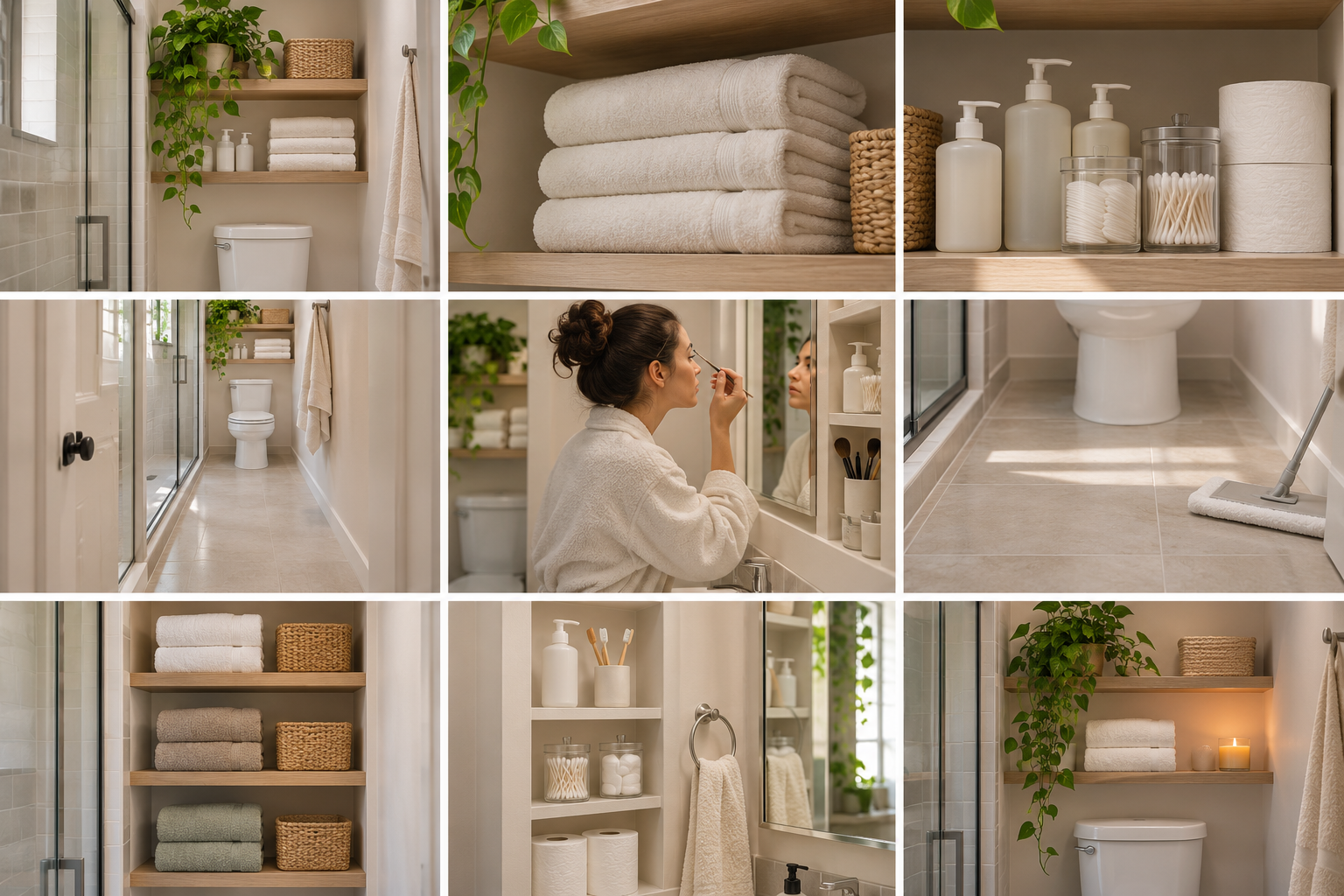
An over-toilet rack uses vertical space that often sits empty when a bathroom has no vanity storage. Check the tank height, flush access, and the rack’s stability before filling the shelves. Put dry towels or light baskets above, and follow any required anchoring instructions rather than treating the rack as automatically freestanding.
A corner tension-pole caddy gives shampoo and soap a place without covering the shower floor. Choose a model compatible with your shower’s height and ceiling surface, with shelves that drain instead of collecting water. Keep the daily bottles on reachable tiers and leave the shower controls and standing area completely clear.
The back of the bathroom door can hold a towel without taking away wall space beside the sink. Check that an over-door hook fits the door and still allows it to close normally. Give the towel enough room to hang open; several damp towels piled onto one hook will dry less easily.
A shallow pocket organizer can separate a hairbrush, travel-size toiletries, and spare washcloths on a dry section of the door. Clear or open pockets make the contents easier to identify at a glance. Keep the weight within the organizer’s rating and avoid crowding the handle or placing it where shower spray reaches the fabric.
A shelf designed for a pedestal sink can use the floor area around its base without requiring a full cabinet. Compare the opening with the pedestal shape and check access to the drain and shutoff valves. Choose a modest depth so the shelf does not make standing at the sink awkward.
The gap beside a toilet or pedestal may be wide enough for a slim cart even when a conventional cabinet will not fit. Measure the actual opening at its narrowest point, including pipework and baseboards. Keep the cart light enough to pull out for cleaning and leave its wheels clear of mats or thresholds.
A small freestanding toilet-paper reserve can gather extra rolls in a single narrow footprint beside the toilet. Check that the holder does not interfere with seated legroom or routine floor cleaning. A covered design may suit a splash-prone location, but the reserve should still remain in a dry and accessible spot.
A toothbrush holder on a suitable wall surface removes the need to balance a cup on a tiny sink rim. Position it where brushes can dry and where the holder can be removed or opened for cleaning. Check the mounting requirements carefully and keep it away from direct spray or the toilet’s immediate splash zone.
Find a ventilated wall-mounted toothbrush holder on Amazon ↗
A shallow wall basket can hold a few clean washcloths within reach of a pedestal sink. Choose a mounting system suited to the wall and the fully loaded basket, especially on tile or plaster. Store only dry cloths here and return used ones to the laundry instead of mixing them with the clean stack.
A narrow towel ladder can give several towels their own rung when one bar is not enough. Check the base footprint and the manufacturer’s stability or anchoring instructions before placing it in a tight bathroom. Leave air between the towels, and make sure the rack cannot obstruct the door or lean against hot surfaces.
A wall holder can keep a hair dryer and styling attachments out of a sink basin or crowded floor basket. Select a holder designed for those tools and install it on an appropriate surface. Unplug and fully cool hot tools before storing them, and keep cords away from the sink and shower.
If the wall construction and headroom allow it, a shallow shelf above the door can hold occasional dry supplies. Choose light contents that can be retrieved safely rather than heavy bottles you need every morning. Keep the shelf clear of door hardware, ventilation grilles, and anything the door needs for its full movement.
Find a shallow shelf for above-door bathroom storage on Amazon ↗
A compact folding rail can provide room for a hand towel without projecting into the bathroom throughout the day. Measure its open position against the door swing and the place where you stand at the sink. Mount it as directed, and keep the rail open until the towel and surrounding surfaces have dried.
A fitted bathtub caddy can hold a washcloth and bathing supplies without relying on a vanity counter. Measure the tub width and check that the supports sit securely on both sides. Lift it out when it interferes with bathing or cleaning, and do not use it as a shelf for electrical devices.
A small handled caddy keeps the bathroom’s cleaning tools together when there is no cabinet to divide them among. Choose a secure storage position appropriate to your household, especially if children or pets can enter the bathroom. Keep products upright in their original containers and avoid placing the caddy in the walking route.
A shelf or rack made for a pedestal can use the space around its base, while a wall-mounted toothbrush holder can keep daily essentials above floor level. Measure the pedestal, pipework, and standing room; the organizer must not block access to shutoff valves or the drain.
Use a dry upper shelf above the toilet, a properly mounted wall basket for clean washcloths, or a compact towel rack. Separate clean towels from damp ones, and leave enough room for towels in use to hang rather than bunch together.
Keep floor-standing pieces narrow and easy to move, and leave access around the toilet and pedestal. Before adding an organizer, check whether it traps a mop, blocks plumbing, or forces you to move several other items just to wipe one surface.