HANDLED FRIDGE BINS
Clear Refrigerator Organizer Bins with Handles
Groups packaged refrigerated foods in bins that pull forward without unloading neighboring groceries.
Find on AmazonSearch Amazon ↗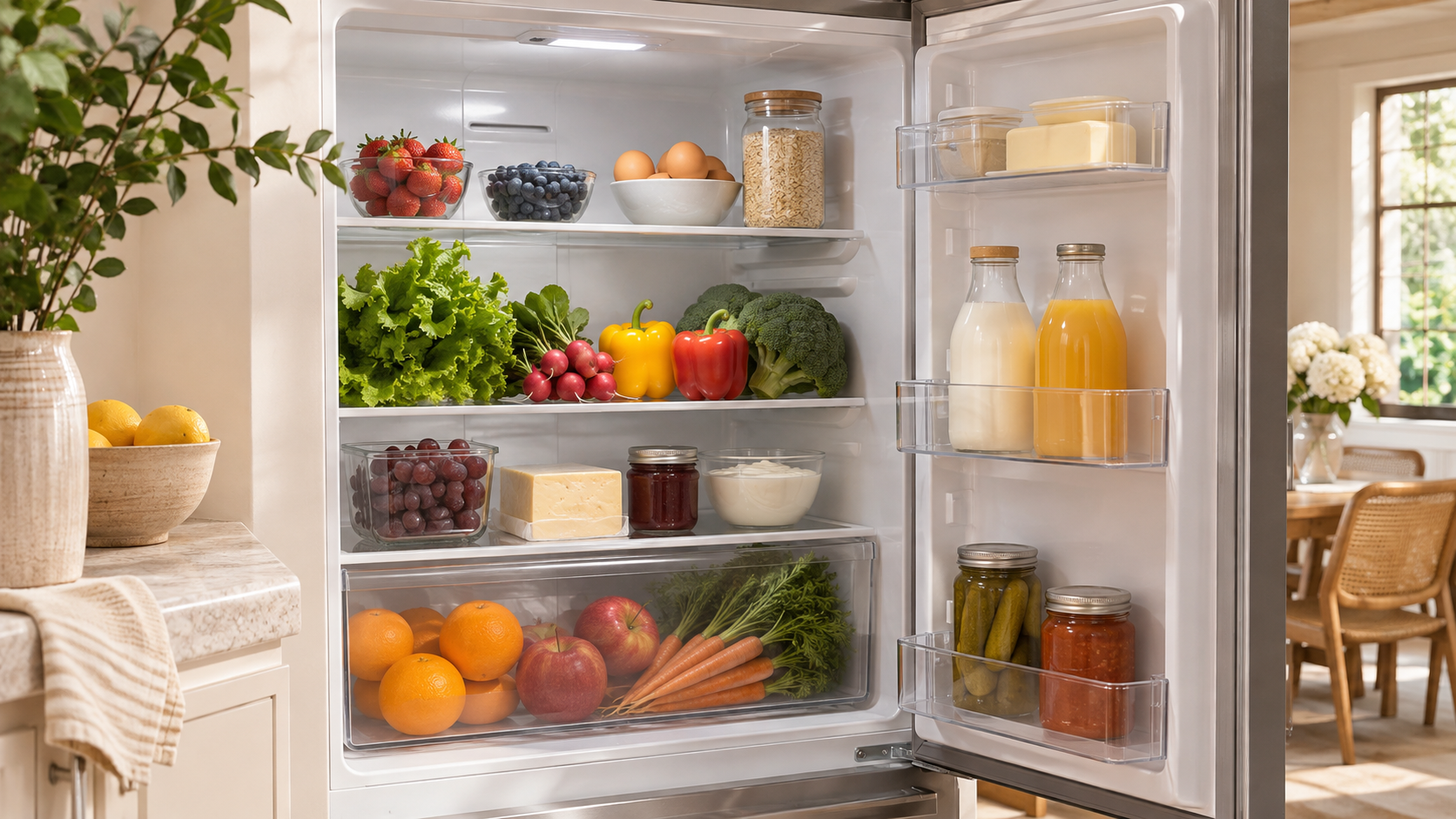
A useful fridge layout lets you see what is available without unloading the shelf in front of it. These ideas organize refrigerated groceries into manageable groups while leaving the doors, drawers, and airflow paths clear.
Affiliate disclosure: As an Amazon Associate I earn from qualifying purchases.
Groups packaged refrigerated foods in bins that pull forward without unloading neighboring groceries.
Find on AmazonSearch Amazon ↗Keeps suitable sealed drink bottles from rolling across the shelf.
Find on AmazonSearch Amazon ↗Brings small condiment jars forward when the shelf and door clearances allow rotation.
Find on AmazonSearch Amazon ↗Makes covered leftovers easier to see without building a tall unstable stack.
Find on AmazonSearch Amazon ↗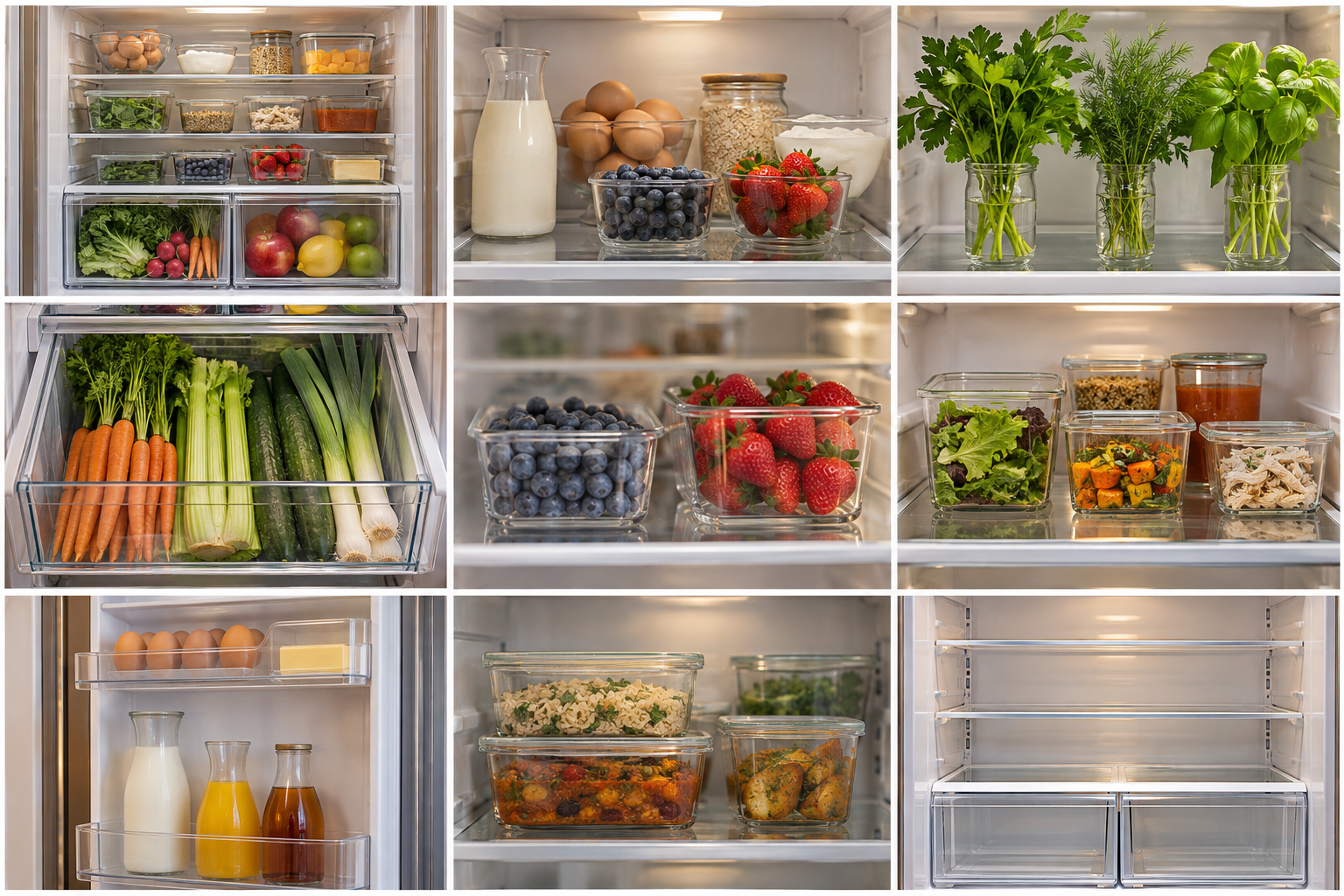
A small clear bin can gather sealed yogurt cups without letting them spread behind taller groceries. Place it on a suitable interior shelf and keep the handle accessible when the door opens. Choose a loaded size you can lift comfortably, and follow the food labels instead of using an attractive bin to justify storing items in an unsuitable location.
Find a clear handled bin for refrigerated yogurt on Amazon ↗
A tall milk container needs a shelf opening that fits its cap and handle without forcing it to tilt. Adjust a suitable shelf position according to the refrigerator’s instructions rather than squeezing the carton behind a low rail. Keep the container upright, follow its storage directions, and leave enough clearance to remove it without knocking neighboring groceries over.
A shallow snack bin makes small sealed items easier to see than a deep box filled in layers. Keep the selection appropriate to the people using the fridge and leave space to take out one item easily. Choose a position suited to the foods’ storage requirements rather than automatically putting everything in the lowest or most convenient spot.
Small removable dividers can keep produce groups from rolling into one another inside a crisper. Fit them around the drawer’s actual shape and leave humidity controls, vents, and the drawer runners accessible. Follow the refrigerator and produce-storage guidance for the foods involved, and remove the dividers regularly so the drawer remains easy to clean.
Raw meat, poultry, and seafood need sealed containment so their juices cannot drip onto other foods. Use a suitable covered container on a lower shelf, separate from ready-to-eat groceries, rather than relying on a decorative open bin. Clean any leakage promptly and follow the food’s storage instructions and applicable food-safety guidance.
Find covered refrigerator containers for raw meat on Amazon ↗
A shaped bottle rack can hold suitable sealed drinks horizontally while keeping them from moving whenever the door closes. Check the bottle diameter, shelf depth, and the rack’s rated capacity before stacking another level. Keep the arrangement modest and leave enough surrounding space to remove a bottle without shifting the entire rack.
Find a refrigerator rack for sealed drink bottles on Amazon ↗
A small turntable can bring a jar from the back of an interior shelf toward the front. Test the full rotation with the refrigerator door open, including the height of the tallest lid. Keep the jars upright and the tray lightly loaded so it turns smoothly without brushing against food containers or the shelf above.
Find a small fridge turntable for condiment jars on Amazon ↗
An organizer bin can give an original egg carton a defined spot without requiring you to discard the package. Check that the carton stays level and that its storage information remains available. Choose an appropriate interior shelf according to food-storage guidance, and avoid building a heavy stack of other groceries on top of the eggs.
A low clear bin can keep sealed cheese packages from slipping behind larger containers. Keep the packages properly closed and retain their storage and date information rather than removing every wrapper for a matching display. Give the bin a suitable interior shelf position and enough room to pull forward without dragging other groceries with it.
A compatible door-bin divider can keep small condiment bottles from leaning across a long open section. Measure the door bin itself and check that the divider does not interfere with removal or cleaning. Store only foods suited to that location, keep caps secure, and avoid forcing tall bottles under a shelf that presses against them.
A small dispenser can keep a few beverage cans in a defined lane instead of scattering them across the shelf. Check the can size, loaded weight, and space needed to remove the front can. Keep the rack stable and avoid adding so many stacked rows that retrieving one drink requires reaching around a heavy display.
A container designed for the herbs you buy can keep delicate stems from being crushed beneath other groceries. Check the container’s intended use and the storage guidance for those herbs before choosing a method. Keep the container within easy view so it does not become a forgotten item at the back of the refrigerator.
Shallow clear containers make portions easier to identify without opening every lid. Use containers intended for food storage, keep leftovers covered, and retain the date information needed to decide when they should be used. Stack only compatible containers that remain stable, and follow safe cooling and storage guidance rather than relying on the organizer itself to preserve food.
Find shallow covered refrigerator leftover containers on Amazon ↗
A refrigerator-compatible under-shelf drawer can hold a few small sealed food packages in an otherwise awkward gap. Check the shelf construction and the organizer’s mounting requirements before attaching anything. The drawer must move without catching containers below, and it should not cover vents or make the supporting shelf difficult to remove for cleaning.
A clearly defined bin can gather refrigerated packages that should be checked before another one is opened. Keep the original date and storage information with each food and review the group during normal meal planning. This is an organization aid rather than a freshness guarantee, so discard food according to appropriate safety guidance instead of trusting appearance alone.
No. Leave airflow paths, vents, drawers, and doors clear, and choose bins that help you retrieve foods rather than pack the refrigerator more tightly. The FDA advises against overpacking and recommends keeping refrigerator temperature at 40°F or below.
No. Follow the food’s storage instructions and use containers intended for direct food contact when food is unpackaged. Keep raw meat, poultry, and seafood securely contained and separate from ready-to-eat foods; an ordinary open organizer bin is not a substitute for sealed food storage.
A manageable loaded weight, visible contents, comfortable handle clearance, and easy removal for cleaning matter more than filling the entire shelf. Test one food group before buying a full matching set, and retain the original information needed to use each food safely.
Further guidance: FDA refrigerator temperature and storage guidance, FDA guidance on separating raw foods