LOW FOOD CONTAINERS
Short Stackable Airtight Pantry Containers
Keep dry ingredients visible while fitting beneath the pantry drawer opening.
Find on AmazonSearch Amazon ↗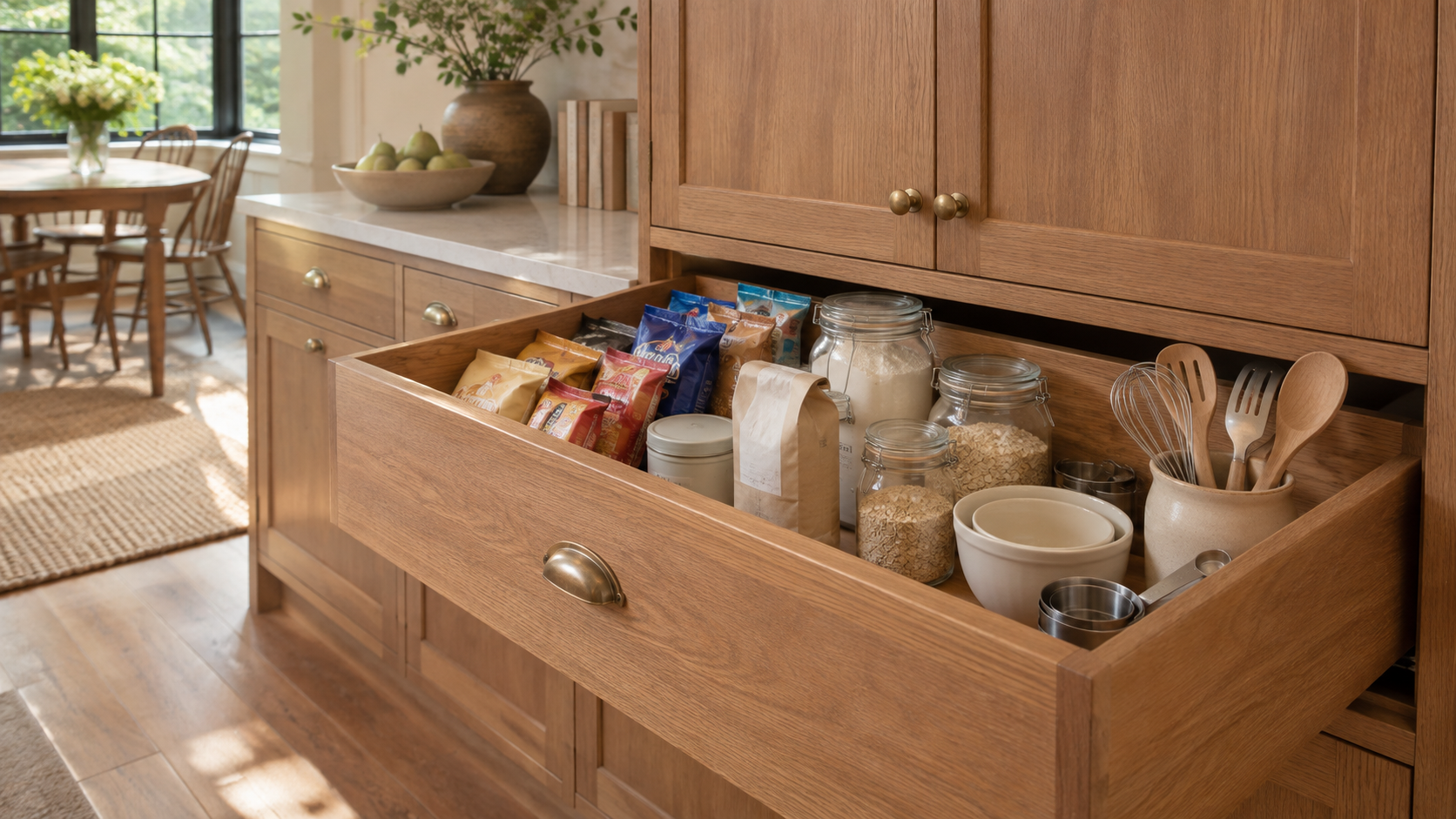
A deep pantry drawer can hold plenty of food while still hiding the ingredient you need. These ideas make breakfast supplies, snacks, baking packets, and dry goods easier to see from above and return after cooking.
Affiliate disclosure: As an Amazon Associate I earn from qualifying purchases.
Keep dry ingredients visible while fitting beneath the pantry drawer opening.
Find on AmazonSearch Amazon ↗Group breakfast supplies or snacks in bins that lift out for use and cleaning.
Find on AmazonSearch Amazon ↗Create fitted compartments for food packages that otherwise slide across a deep drawer.
Find on AmazonSearch Amazon ↗Keeps baking packets and food pouches upright without burying them beneath larger packages.
Find on AmazonSearch Amazon ↗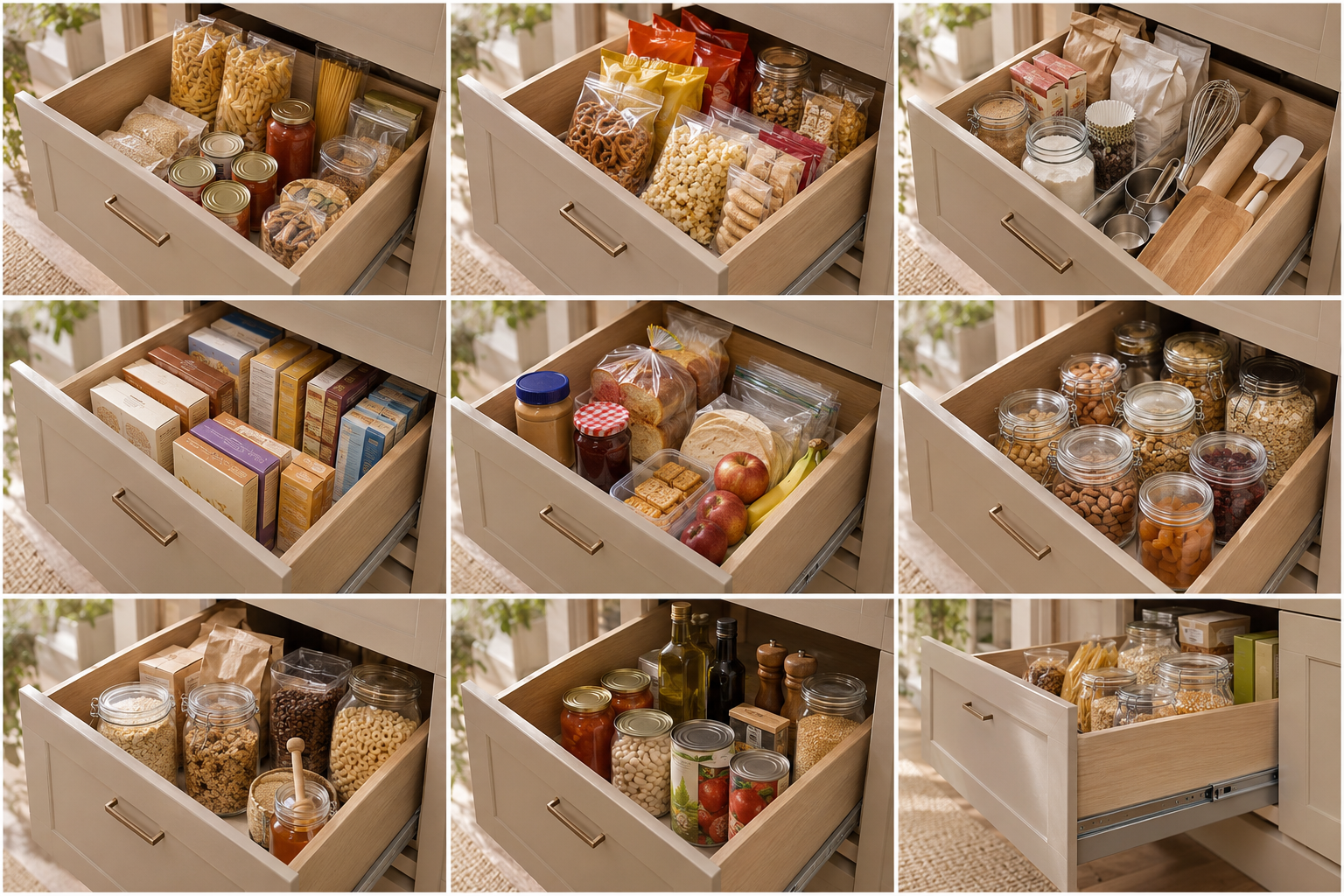
Tall pantry containers can fit inside an open drawer yet strike the cabinet frame when it closes. Measure the usable clearance at the opening and compare it with the container’s lid, not just its body. Shorter containers in a single visible layer often make a deep drawer easier to scan and close.
A small removable bin can gather oatmeal packets, nut butter, and other shelf-stable breakfast supplies in one reachable spot. Size the bin around the packages your household actually uses rather than filling an entire drawer by default. Keep products that require refrigeration in their proper storage location instead of forcing every breakfast item into the pantry.
Flexible pouches are difficult to browse when they collapse across the drawer base. Adjustable dividers can hold them in short upright rows so a package can be removed without disturbing the rest. Leave a little movement between rows, and choose divider heights that will not catch the packaging or prevent the drawer from closing.
Find adjustable dividers for pantry food pouches on Amazon ↗
Rice, oats, and dried beans are easier to identify when their containers remain visible from above. Choose containers intended for food storage and transfer any preparation or expiry information you will need from the original package. Avoid creating a second hidden layer unless you can remove the upper container without lifting several others first.
A few cans in a sturdy shallow bin can be easier to retrieve than a heavy stack at the back of a pantry. Check the drawer and organizer load ratings before grouping dense foods together. Keep the quantity manageable, and avoid stacking cans so high that they become unstable when the drawer starts or stops.
If spices belong in a pantry drawer, arrange short jars in a shallow insert rather than crowding them behind tall food packages. Put their names on the lids or use an arrangement that lets you see the contents and original labels. Check the closed-drawer clearance, and keep the spice section away from heat and moisture.
Yeast sachets, baking decorations, and small mix packets can disappear inside a large pantry bin. A packet organizer with narrow compartments keeps them upright and separated by use. Keep the original packets intact, follow their storage instructions, and leave enough space to take one out without bending the entire row over.
A handled snack bin can move from the pantry drawer to the lunch-packing spot and return as one group. Choose a size that is comfortable to lift when full rather than packing the drawer edge to edge. Keep different snack types in small sections so the bottom does not become a layer of forgotten crushed wrappers.
Long pasta does not always suit the same square container that works for rice. Compare a spaghetti container’s full length with the drawer depth and the space needed to lift it out. Store the container in a clear lane rather than diagonally across several food groups, and retain the cooking instructions if you decant the package.
Find drawer-friendly spaghetti storage containers on Amazon ↗
An upright bottle of cooking oil can leave a sticky ring on a drawer base. A shallow washable tray can contain small drips while keeping the bottle separate from paper packages. Check the closed-drawer clearance around the cap or pour spout, follow each oil’s storage instructions, and clean spills rather than letting them accumulate in the tray.
When spare food-container lids are stored with pantry supplies, a narrow upright divider keeps them from sliding beneath food packages. Group lids by shape and keep only the ones that match containers you still use. Place the section where you can lift a lid straight out without brushing against open food or tipping nearby jars.
A second bag of flour or box of cereal should not bury the one already open. Give unopened pantry refills their own small bin and keep the active package in the more accessible section. Check dates when restocking, and bring older suitable supplies forward before adding another package behind the row.
A removable washable drawer liner can make crumbs easier to collect beneath packaged pantry foods. Cut it to lie flat without bunching against the drawer sides or sliding into the runners. Keep food in its own suitable container, and lift the liner out for cleaning rather than covering spills with another organizer.
Not every package needs to be transferred into a new container immediately. A small basket can hold properly closed snack or baking bags upright, with clips visible and easy to reach. Follow the food’s storage instructions, and remove loose crumbs before they collect beneath the bags or spill into neighboring pantry sections.
Use the clearance at the closed drawer opening as the limit, including the container lid, handle, or pour spout. The interior side walls alone may not reveal an obstruction above the drawer. Leave enough room to lift a container out without scraping the frame.
No. Decant when a suitable food-storage container improves access and fits the drawer. Keep cooking instructions, dates, and other necessary package information. Original packages stored upright in a bin can be a practical choice when they close securely and suit the food’s storage requirements.
Use a drawer and organizer rated for the intended load, usually keeping dense groups such as cans low and modest in quantity. Spread weight sensibly and check that the drawer still runs smoothly. Do not use extra storage capacity as a reason to exceed the hardware’s limits.